Our Work
Gallery



Behind the Photos
The images above are a snapshot of the type of work we do day to day across Newport and South Wales, from internal finishing to full external render systems. Each job looks straightforward once it's finished, but there's a lot of preparation behind every smooth wall and clean render line, and that preparation is usually what separates a job that lasts from one that doesn't.
Internal Skimming
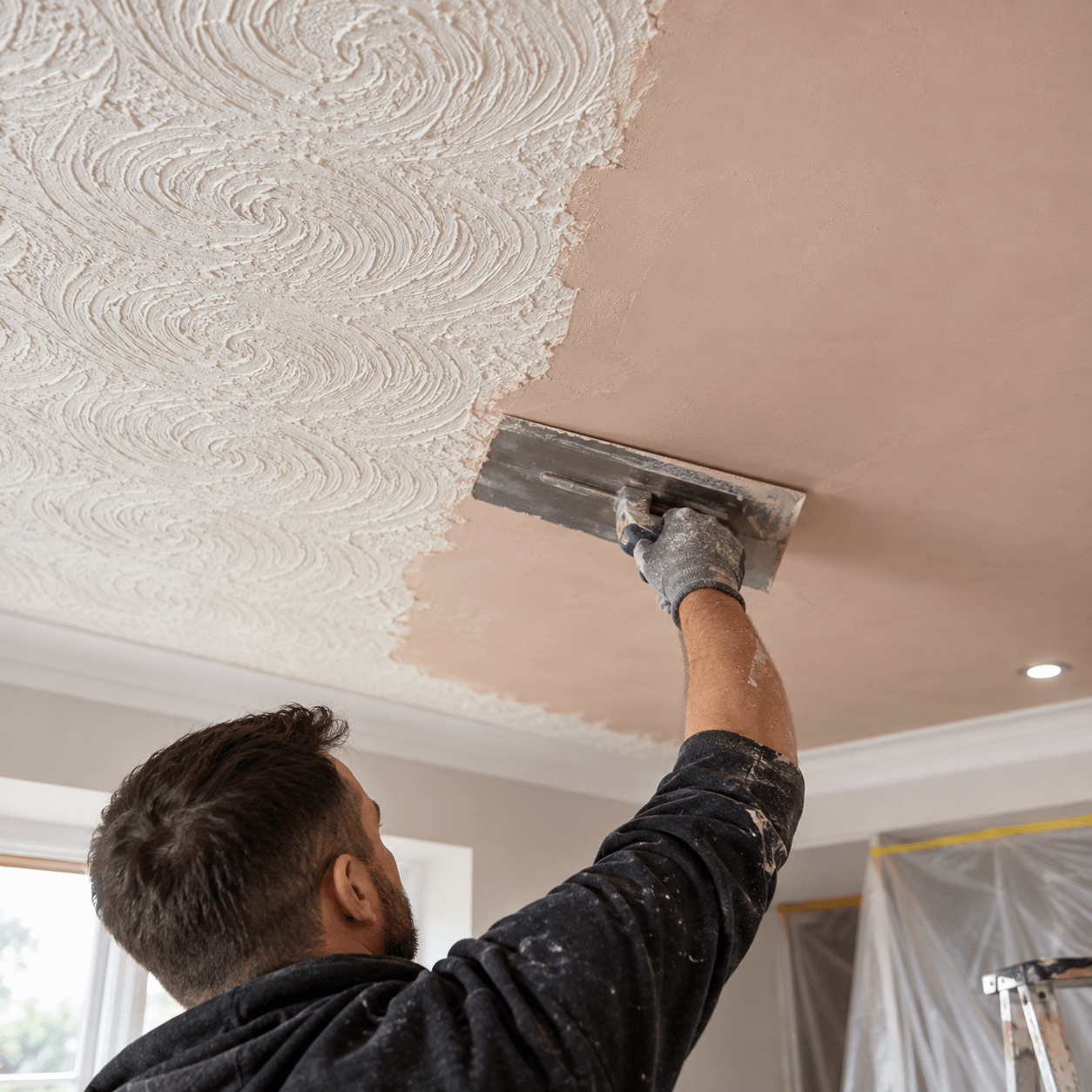
The skimming shot shows the finishing coat going on over an existing base coat, with the fresh plaster meeting the previously skimmed section. Getting the join invisible once painted takes a steady hand and the right timing, applying and polishing the plaster at the correct stage of set so the surface finishes flat without drag marks or a visible seam.
External Render
The rendering photo shows a textured finish being floated onto a prepared background. Getting a consistent texture across a whole elevation means working methodically, keeping a wet edge between sections, and floating each area at a similar stage of set so the pattern reads evenly once the whole wall is finished and dry.
Dry Lining
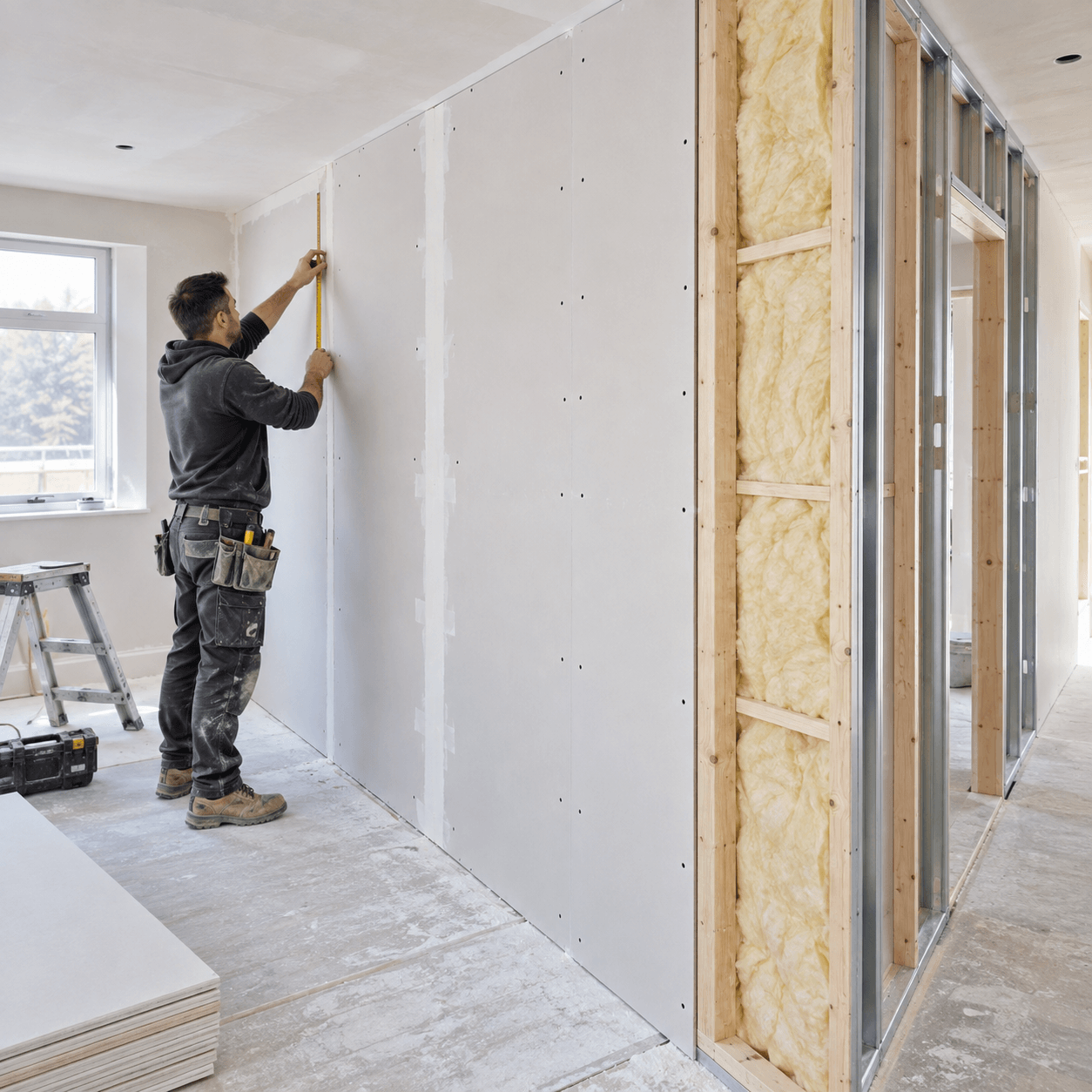
The dry lining photo shows new plasterboard going up against a freshly framed stud wall, with insulation already fitted between the timbers. Boards are measured, cut and fixed tight to the frame, with joints staggered so the finished wall doesn't have a continuous seam running through it once skimmed or taped.
Repairs
The repair photos show a damaged wall being cut back to a sound edge and built back up in stages, from base coat through to a smooth finish ready for paint. Matching the existing texture and getting the new plaster level with the old surface is what makes a patch disappear rather than stand out.
Coving & Ceiling Roses
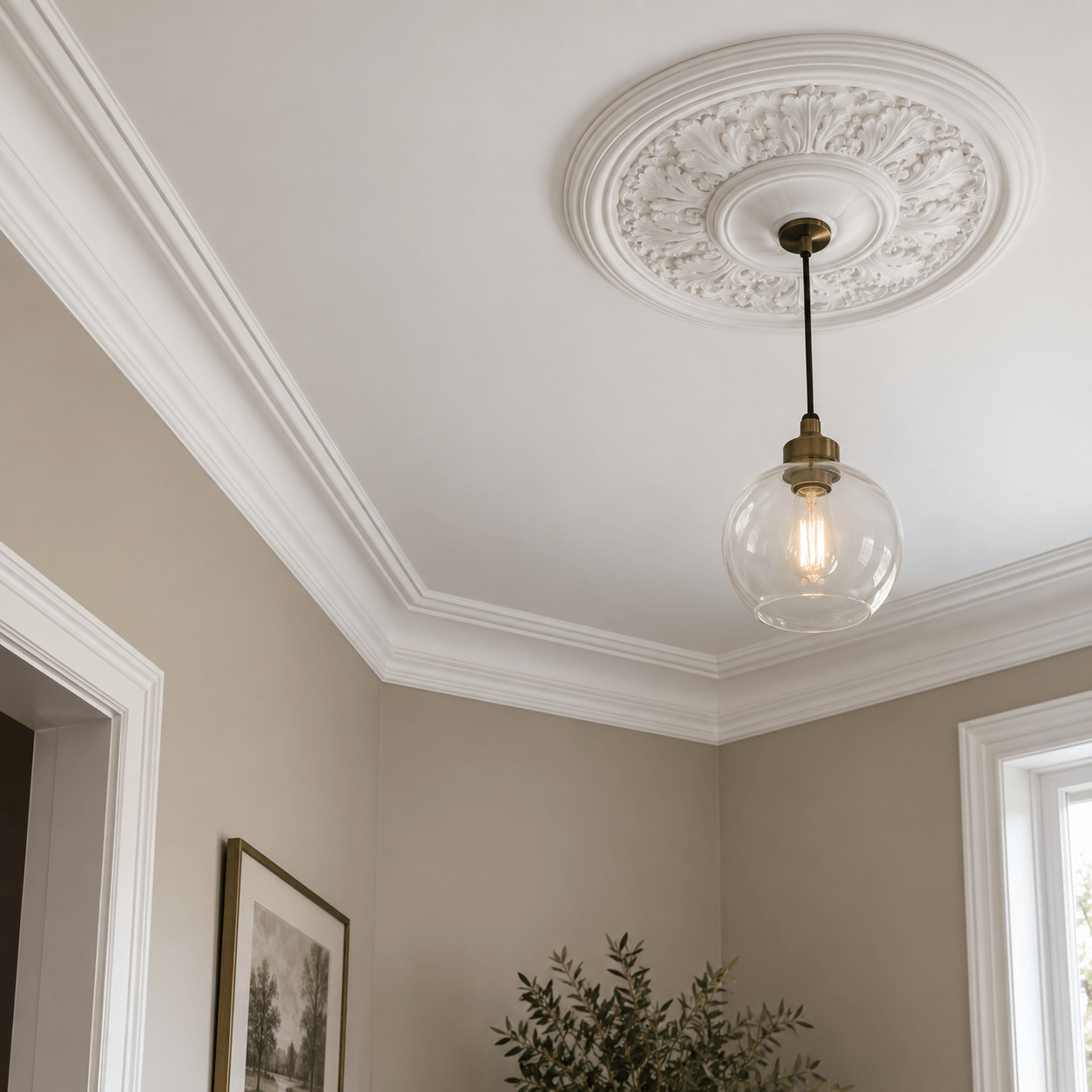
The ceiling photo shows a finished ceiling rose and coving run, fitted flush with the surrounding plaster and painted to match. Getting a run like this to look continuous takes careful mitring at every corner and enough filling and sanding that no joint is visible once the light hits it.
Artex Removal
The Artex removal photo shows a textured ceiling being stripped back and re-skimmed. It's a messy job by nature, but the result is a flat, modern ceiling that's far easier to keep looking good than a textured one, and much simpler to repair in future if it's ever damaged.